
The Full-Robot Explanation for Being Human - By Josh Lefers
We call walking barefoot "earthing" and playing games "competitive socialising." Why I think the AI era is actually the age of the human.
Here’s the thought that’s been bothering me for a long time. Being human used to be first nature. Second nature was something we learned so well it felt like a natural extension of ourselves. But are we sliding into some kind of third nature? Some days it feels like it. We’re coming up with all these “technical” terms for what it is do normal human things. It’s like we’ve gone full robot explanation for becoming a human again. (And yes, you’ll see, I’m part of the problem!)
Here’s the nagging question I needed to answer: when did walking barefoot get its own brand name? Turns out it was a cable-TV technician called Clint Ober who coined it in the '90s. Once you hear that, it makes a horrible kind of sense: the man grounded wires all day, so why not ground a human? He decided our shoes were "insulating" us from the planet and, instead of just taking them off, built a mat with a cord so you could touch grass without leaving your bed. He took what my nan gave me for free, go outside, get the ground beneath your feet, get some fresh air, and turned it into "earthing," now with a white paper and a checkout. There's real research behind it (a widely cited paper reckons barefoot contact may dampen inflammation), so I'm not tossing it out, but sit with that one. "Digital detox" is just not being on your phone or, if we go deeper, it’s actually just living (on planet earth). And my favourite, "being present." You mean… listening? To a human? In a room? We've built an entire wellness vocabulary for things a golden retriever does for free.
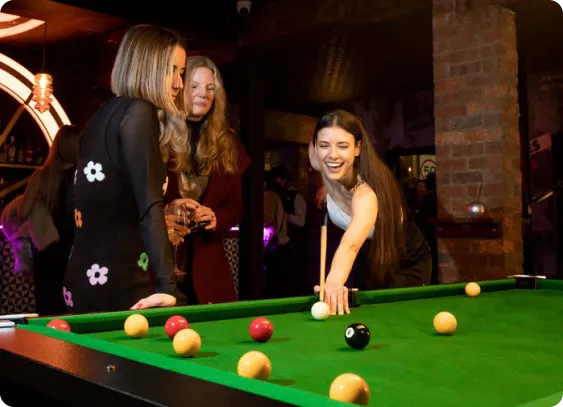
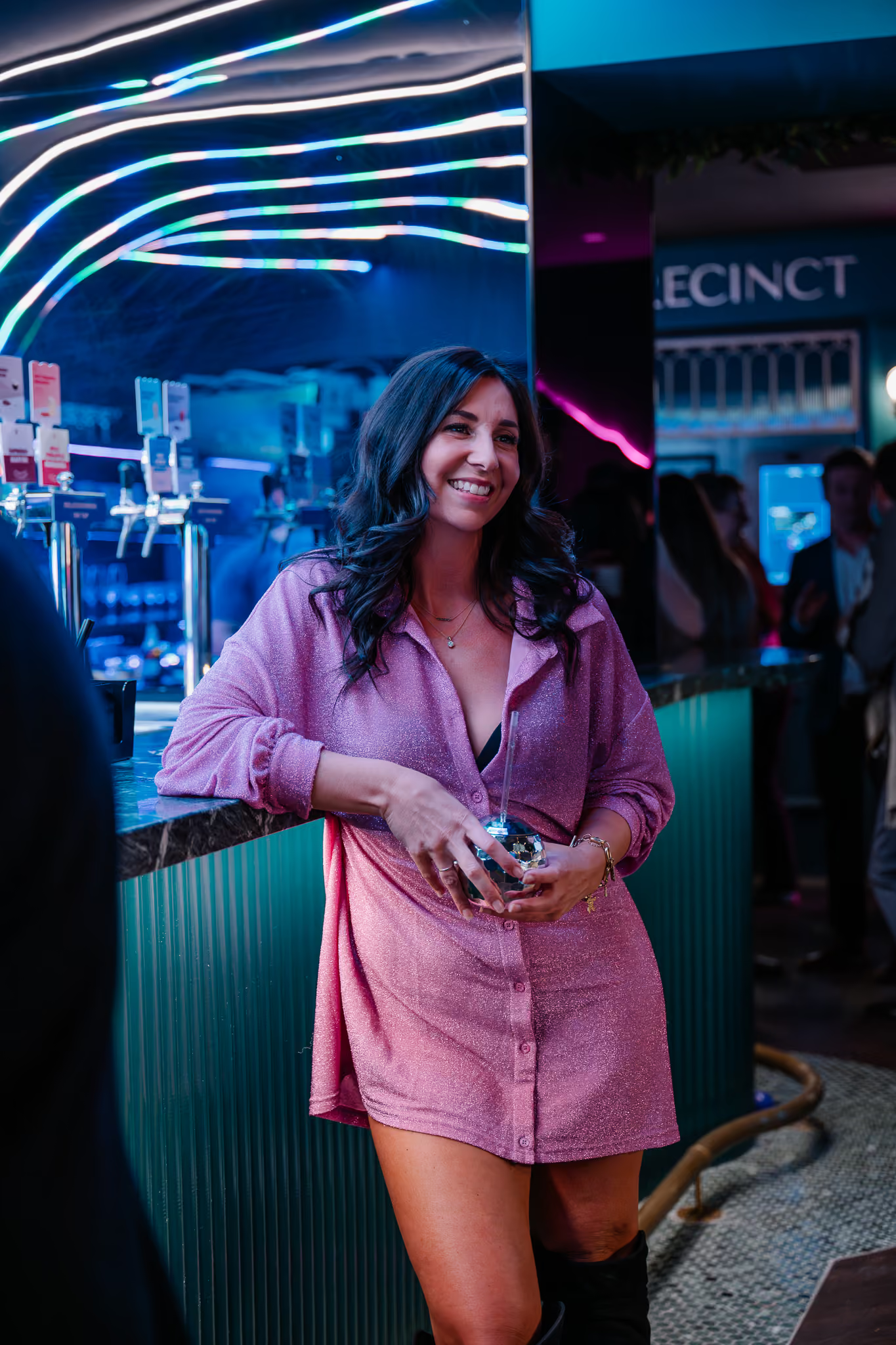
And I can’t mock any of it, because we named ours too at Ballers Clubhouse.“Competitive socialising.” That’s our category, the phrase my longterm business partner Stephen Wools used on stage in London at the Publican Awards, in a room with the people who more or less built the modern version of it. It’s a real, world-class industry and we’re proud to be near the front of it. But strip the varnish off the term and you know what competitive socialising actually is? It’s playing games. It’s wanting to beat your mates, in a fun way. The most instinctive human thing there is, the thing every kid does before the world trains it out of them, handed a tidy two-word label so adults feel allowed to do it again.
Here’s the thought that’s been bothering me for a long time. Being human used to be first nature. Second nature was something we learned so well it felt like a natural extension of ourselves. But are we sliding into some kind of third nature? Some days it feels like it. We’re coming up with all these “technical” terms for what it is do normal human things. It’s like we’ve gone full robot explanation for becoming a human again. (And yes, you’ll see, I’m part of the problem!)
Here’s the nagging question I needed to answer: when did walking barefoot get its own brand name? Turns out it was a cable-TV technician called Clint Ober who coined it in the '90s. Once you hear that, it makes a horrible kind of sense: the man grounded wires all day, so why not ground a human? He decided our shoes were "insulating" us from the planet and, instead of just taking them off, built a mat with a cord so you could touch grass without leaving your bed. He took what my nan gave me for free, go outside, get the ground beneath your feet, get some fresh air, and turned it into "earthing," now with a white paper and a checkout. There's real research behind it (a widely cited paper reckons barefoot contact may dampen inflammation), so I'm not tossing it out, but sit with that one. "Digital detox" is just not being on your phone or, if we go deeper, it’s actually just living (on planet earth). And my favourite, "being present." You mean… listening? To a human? In a room? We've built an entire wellness vocabulary for things a golden retriever does for free.
And I can’t mock any of it, because we named ours too at Ballers Clubhouse.“Competitive socialising.” That’s our category, the phrase my longterm business partner Stephen Wools used on stage in London at the Publican Awards, in a room with the people who more or less built the modern version of it. It’s a real, world-class industry and we’re proud to be near the front of it. But strip the varnish off the term and you know what competitive socialising actually is? It’s playing games. It’s wanting to beat your mates, in a fun way. The most instinctive human thing there is, the thing every kid does before the world trains it out of them, handed a tidy two-word label so adults feel allowed to do it again.
The CEO who blamed me for his bottom line
A while back a CEO pulled me aside and told me, half-serious, that a night his team had at one of our venues was a big part of why he still had his CFO and his head of sales that year, two people he’d have hated to lose. Then he grinned and said the single greatest thing I’d done for his bottom line all year was probably letting his CFO beat me at darts.
I’ll take it, he said. I got beaten at darts, and it turns out it is my unexpected retention strategy.
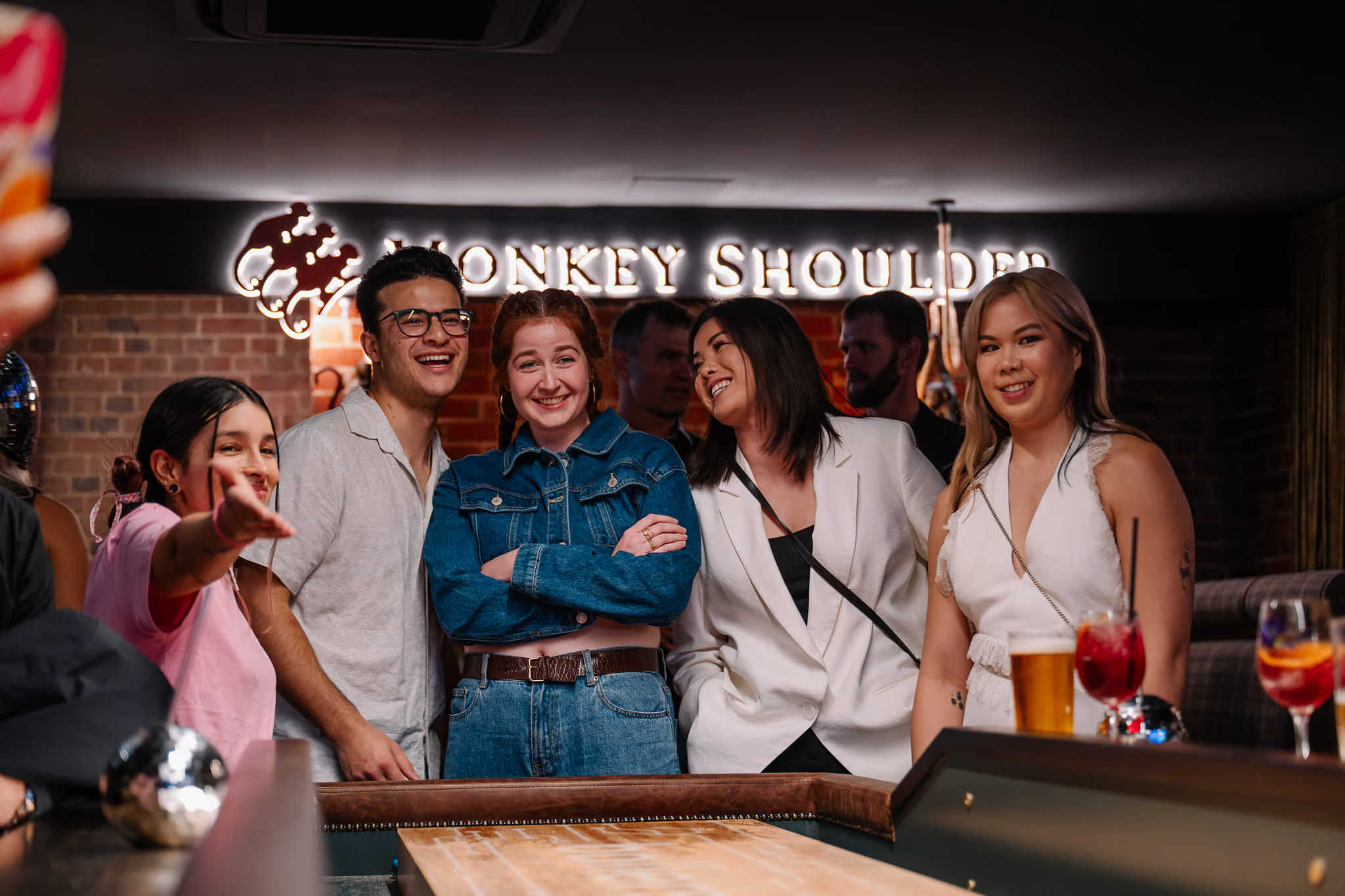
I won’t oversell this: I’m not going to promise your revenue jumps if your team throws some darts or slides down a few shuffleboard pucks late into the night. But the CEO wasn’t really joking, and the research backs him. BetterUp found employees with a strong sense of belonging show a 56% jump in job performance and a 50% drop in turnover risk. Gallup finds people with a best friend at work are up to seven times as engaged. Leaders already know connection drives performance and keeps people. What they struggle with is doing it. That’s the gap we live in: we don’t sell games, we take the heavy lifting off your plate so the human bit can actually happen.
I’ll take it, he said. I got beaten at darts, and it turns out it is my unexpected retention strategy.
I won’t oversell this: I’m not going to promise your revenue jumps if your team throws some darts or slides down a few shuffleboard pucks late into the night. But the CEO wasn’t really joking, and the research backs him. BetterUp found employees with a strong sense of belonging show a 56% jump in job performance and a 50% drop in turnover risk. Gallup finds people with a best friend at work are up to seven times as engaged. Leaders already know connection drives performance and keeps people. What they struggle with is doing it. That’s the gap we live in: we don’t sell games, we take the heavy lifting off your plate so the human bit can actually happen.
.avif)
Welcome To The Age of The Human
Here's where I've landed, and it flips my own argument on its head. Yes, I'm part of the “third nature”. I rebadge human stuff for a living. But that's exactly why I'm optimistic, because all this renaming is just us relabelling what we already know and already need as a human. You don't build a whole industry, a whole vocabulary, a whole pile of white papers around something people don't want. The frantic renaming is the tell: we are quietly starving for the human bit. Everyone's calling this the age of AI. I think they've got it backwards. I think we’re walking into the age of the human.
Let me give you give you a little side riff on this. Remember when video killed the radio star? It didn’t. Television was meant to be the end of audio, and instead we now listen to more podcasts, more audio, than any humans who have ever lived. The new tech didn’t kill the old human thing. It exposed how much we still wanted it. AI is the same. It won’t kill connection; it’ll leave us starving for it. Because “connection” is just a code word for spending time with other people, the thing tribes and communities have done since we lived in caves, and that was never a trend. It’s the base layer.
So here’s the seriously dumb thing I actually believe: the whole point of AI/robots should be to make you more human. The robots are coming. Good, let them come (they’re already here!). But think about what you’re hoping they will help you with: not at making you more efficient, more optimised, more machine-like, but at handing your time and attention back.
But… that’ll only happen if you choose it. So come and competitive socialise with us at Ballers. Or somewhere else. Just remember what you’re actually doing when you do. You’re connecting. You’re playing, the way you did as a kid. We just gave it a name so you’d feel allowed.
So when the robot in you thinks you’re having a mental health day, feeling socially isolated, and that some competitive socialising might sort out your social awkwardness, try speaking old-school human: you’re having a shitty day. Go play some games with other people and you won’t feel lonely. Now get off your phone and give someone, anyone, a hug.
Let me give you give you a little side riff on this. Remember when video killed the radio star? It didn’t. Television was meant to be the end of audio, and instead we now listen to more podcasts, more audio, than any humans who have ever lived. The new tech didn’t kill the old human thing. It exposed how much we still wanted it. AI is the same. It won’t kill connection; it’ll leave us starving for it. Because “connection” is just a code word for spending time with other people, the thing tribes and communities have done since we lived in caves, and that was never a trend. It’s the base layer.
So here’s the seriously dumb thing I actually believe: the whole point of AI/robots should be to make you more human. The robots are coming. Good, let them come (they’re already here!). But think about what you’re hoping they will help you with: not at making you more efficient, more optimised, more machine-like, but at handing your time and attention back.
But… that’ll only happen if you choose it. So come and competitive socialise with us at Ballers. Or somewhere else. Just remember what you’re actually doing when you do. You’re connecting. You’re playing, the way you did as a kid. We just gave it a name so you’d feel allowed.
So when the robot in you thinks you’re having a mental health day, feeling socially isolated, and that some competitive socialising might sort out your social awkwardness, try speaking old-school human: you’re having a shitty day. Go play some games with other people and you won’t feel lonely. Now get off your phone and give someone, anyone, a hug.

Ballers Clubhouse has competitive socialising venues in Melbourne CBD, Carlton and Adelaide. Come and play: ballersclubhouse.com.au
BetterUp, “The Value of Belonging at Work,” Harvard Business Review (2019)Gallup, The Increasing Importance of a Best Friend at WorkChevalier et al., “Earthing,” Journal of Environmental and Public Health (2012)
BetterUp, “The Value of Belonging at Work,” Harvard Business Review (2019)Gallup, The Increasing Importance of a Best Friend at WorkChevalier et al., “Earthing,” Journal of Environmental and Public Health (2012)
TAKE A VIRTUAL VENUE TOUR
Adelaide

Carlton

Melbourne CBD
Send an Enquiry
Interested in booking your private event at Ballers? Have a question? Fill out the form below to get started.
RECOMMENDED READS FOR YOU...





.avif)

.avif)